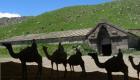
Selim Pass Caravanserai — Medieval Stop on the Armenian Silk Road
This caravanserai is one of many in Armenia; medieval overnight spots for caravans carrying goods to markets in Europe and the Orient. Many think of the Silk Road as a single trail, but there were dozens of routes connecting East and West, mostly by land and some by sea. These routes crossed Armenia in all directions, often tracing river valleys and lake shores.
Historical Background
You can trace the Silk Road in Armenia by following its caravanserais, or inns — medieval stopping points where riders and pack animals spent the night. The Selim Pass Caravanserai is a valuable example of such inns.
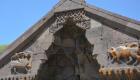
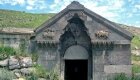
A faint inscription over the entry dates the building to 1326–1327. Inside the arched entry, however, the completion date is 1332, attributed to Prince Orbelian Chesar and his brothers. Two bas-relief carvings on the façade are emblems of the Orbelian family: a winged animal and a bull.
Inscription Details
The complete inscription reads:
«In the name of the Almighty and powerful God, in the year 1332, in the world-rule of Busayyid Khan, I Chesar son of Prince of Princes Liparit and my mother Ana, grandson of Ivaneh, and my brothers, handsome as lions, the princes Burtel (Burtegh), Smbat and Elikom of the Orbelian nation, and my wife Khorishah daughter of Vardan [and …] of the Senikarimans, built this spiritual house with our own funds for the salvation of our souls and those of our parents and brothers reposing in Christ, and of my living brothers and sons Sargis, Hovhannes the priest, Kurd and Vardan. We beseech you, passers-by, remember us in Christ. The beginning of the house [took place] in the high-priesthood of Yesai, and the end, thanks to his prayers, in the year 1332.”
Note: “Prince of Princes Liparit” is the grandson of the sponsor of St. Karapet in Noravank. Burtel commissioned the tall Astvatsatsin (Burtelashen) at Noravank, and Elikom is the great-grandson of the last free Orbelian ruler, also named Elikom.
Renovation and Architecture
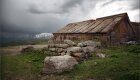
Destroyed in the 15th–16th centuries, the caravanserai was renovated between 1956 and 1959.
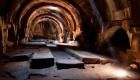
The basalt structure consists of an entry hall on the east end and a long hall for animals (13 x 26 m) divided into three aisles with two rooms for people. Feeding troughs lay between the pillars. The entry has stalactite decoration over the doorway. To the east of the caravanserai is a large half-buried vaulted chapel.