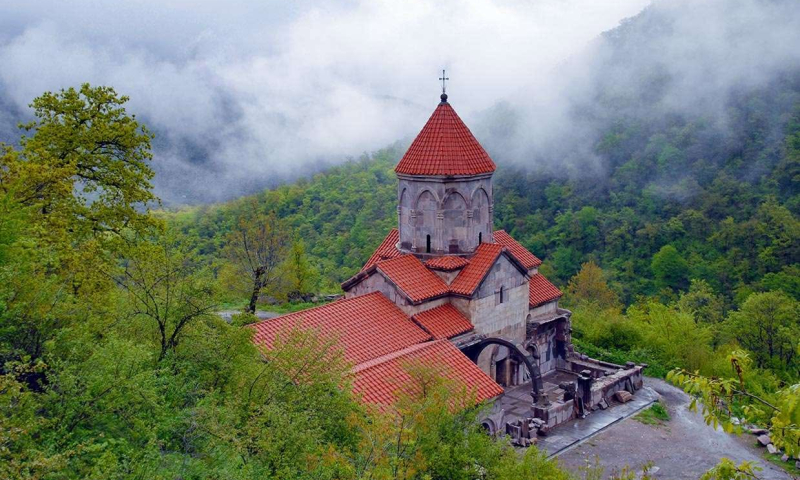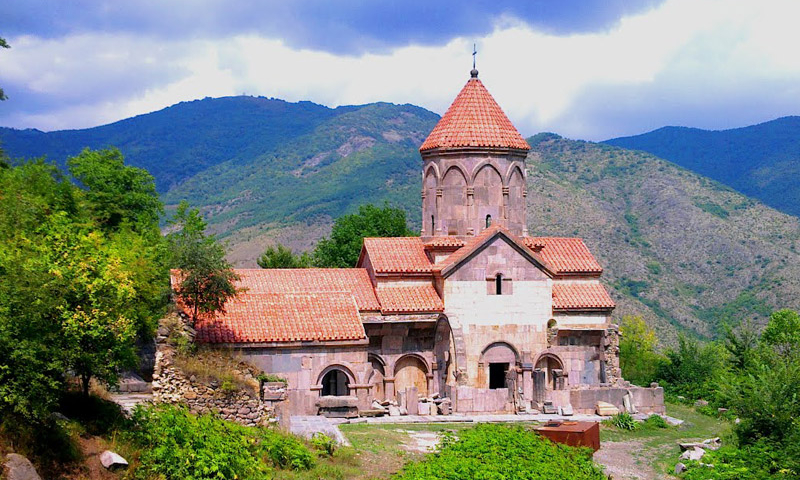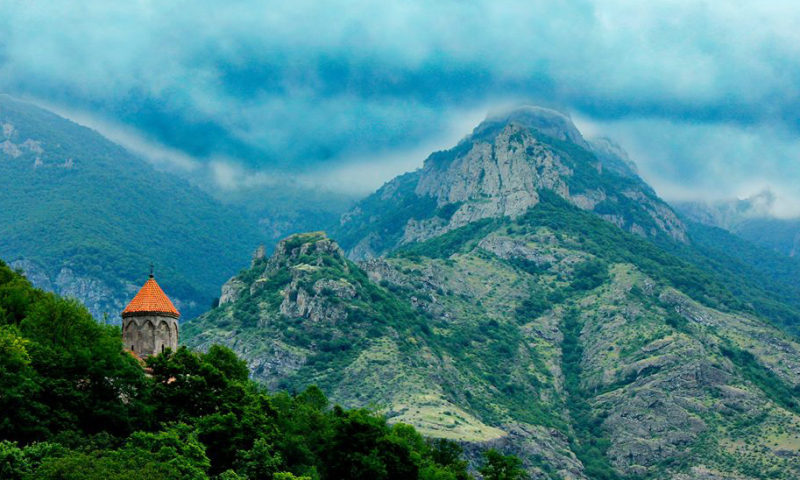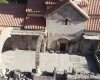
Vahanavank Monastery is one of the significant medieval monastic complexes of Syunik, located near the city of Kapan, among the picturesque mountains and forests of southern Armenia. Founded in the early 10th century by Prince Vahan, son of the Syunik prince Tsaghik, the monastery remained an important spiritual, cultural, and educational center of the region for several centuries.
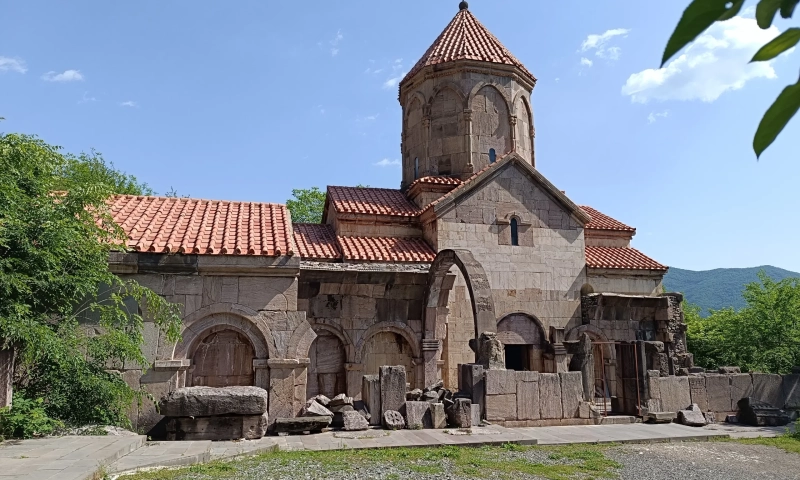
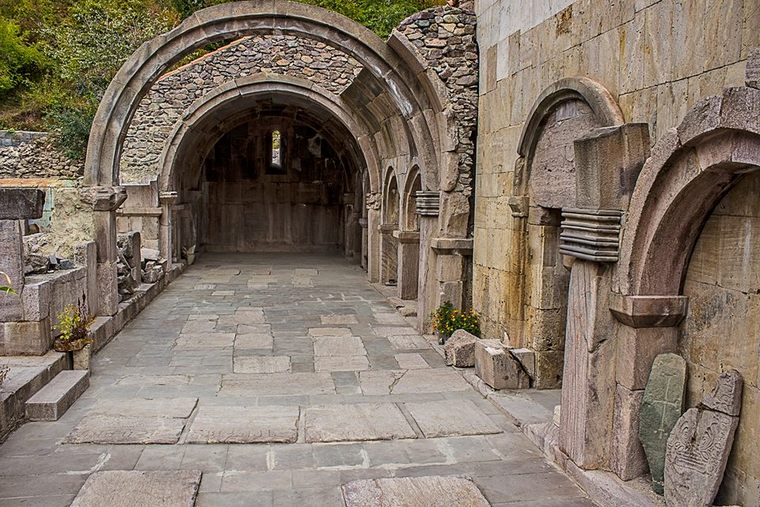
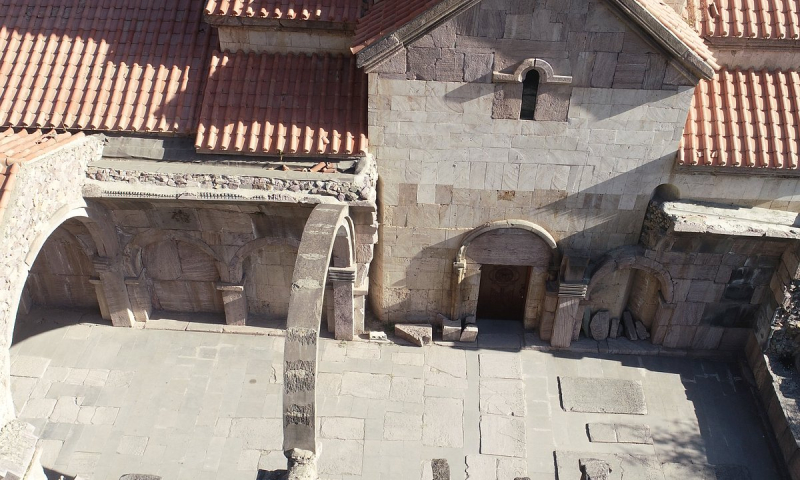
The main church of the complex is the Church of St. Gregory the Illuminator, whose construction was completed in 911. Built from carefully dressed basalt, the church is a characteristic example of medieval Armenian architecture. In the 11th century, the monastic complex was significantly expanded and supplemented with new structures, including a gavit and other buildings that formed a unified architectural ensemble.
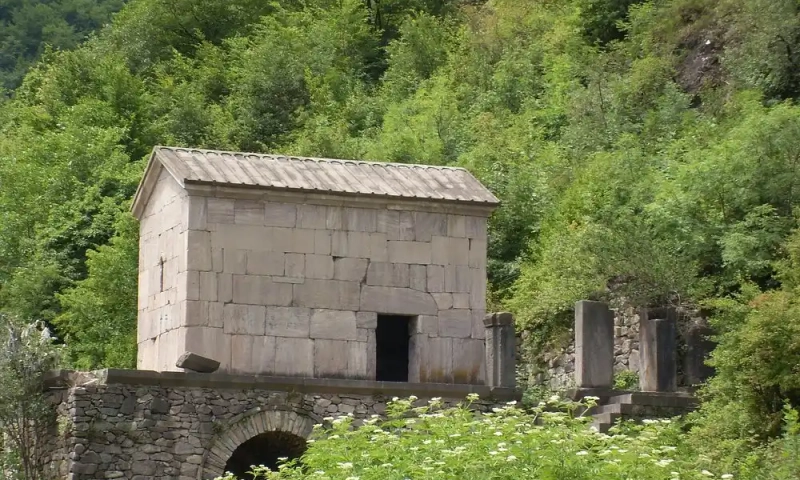
A special place within the complex is occupied by the Church of the Holy Mother of God, built in 1086 at the initiative of the Syunik Queen Shahandukht and her sister Kata. The church is distinguished by its unusual two-story design: the lower section was used as a burial chamber, while the upper section served as a small church. This feature reflects Vahanavank’s important role as a burial place for members of the princely and royal dynasties of Syunik.
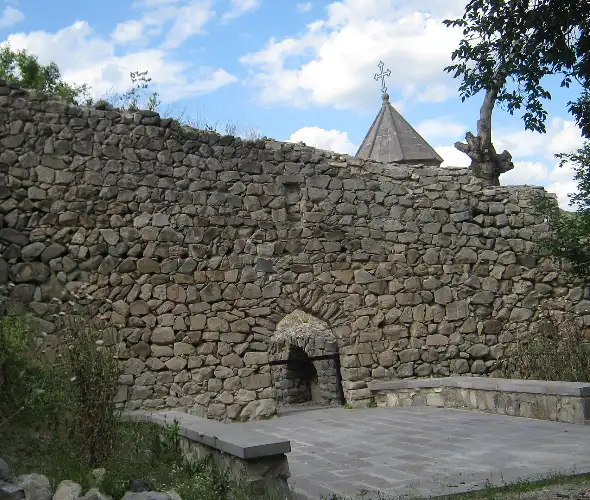
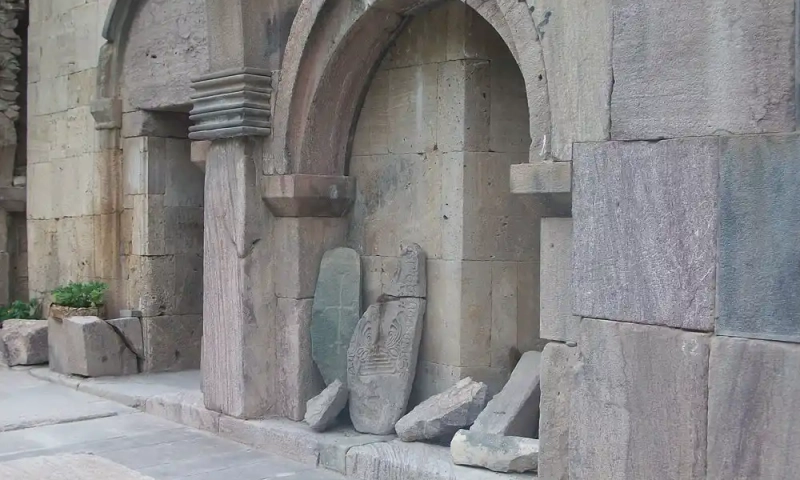
The monastery grounds are of great importance for archaeology and the study of medieval epigraphy. Numerous khachkars, tombstones, architectural fragments, and stone inscriptions have been discovered here. They contain the names of members of noble families, clergy, and patrons of the monastery, providing valuable sources for the study of the political, religious, and cultural history of medieval Syunik.
Archaeological research at Vahanavank began in the 1960s. Excavations uncovered numerous burials, the remains of residential and service buildings, an ancient cemetery, and other structures belonging to the monastic complex. These studies helped establish the different stages of the monastery’s construction and expansion and significantly clarified its history and role in the region.
During the medieval period, Vahanavank served more than a religious function. The monastery had a school and was closely connected with the spiritual and educational life of Syunik. With the patronage of local princes and members of ruling dynasties, the monastery gradually developed into an important religious and cultural center.
Today, Vahanavank is an important historical and architectural monument of Armenia and one of the notable attractions of Syunik Province. Its ancient churches, khachkars, and stone inscriptions blend harmoniously with the surrounding mountain landscape, creating a unique atmosphere of peace and seclusion. A visit to Vahanavank offers an opportunity to discover the rich architectural and cultural heritage of medieval Armenia and gain a deeper appreciation of the history of Syunik.